
For many homeowners, stairs become less practical over time. Whether you are planning for aging in place, helping a loved one with mobility challenges, or simply making daily living easier, a multi-story home elevator can add comfort and convenience to a two-story or multi-level house.
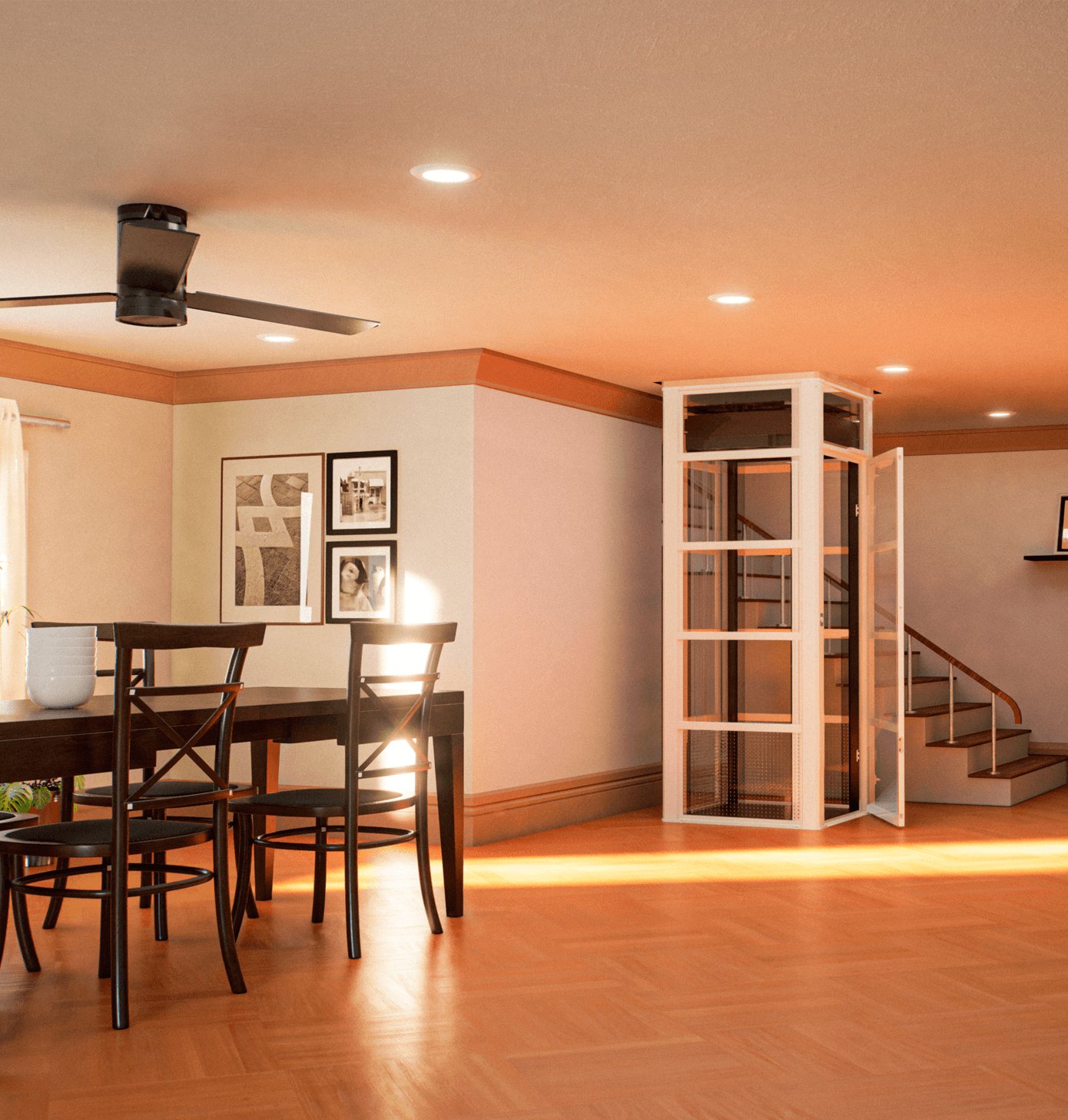
Cube Lifts are compact residential elevators designed for homes where space matters. Instead of using traditional cables, hydraulic systems, or a large machine room, Cube Lifts use air pressure and pneumatic vacuum elevator technology to move the elevator cab between floors.
This makes them an attractive option for homeowners who want a compact home elevator with less room required, fewer structural modifications, and a modern look that fits into existing homes. In this guide, we’ll look at how Cube Lifts work in multi-story homes, how much space they need, what safety features matter, and when they may be a better alternative to stair lifts or traditional residential elevator systems.
Quick Answer: Are Cube Lifts Good for Multi-Story Homes?
Yes, Cube Lifts can work well in many two-story and multi-story homes where space is limited. They use air pressure instead of hydraulic systems or traction equipment, so they do not require a traditional elevator shaft, pit, or separate machine room. The right fit depends on the home layout, available space, installation requirements, accessibility needs, and local elevator standards.
Why Homeowners Add Residential Elevators to Multi-Story Homes
In a multi-story home, stairs can become a daily obstacle. This is especially true for homeowners dealing with mobility challenges, recovering from an injury, or planning ahead for aging in place. A residential elevator can make daily living easier by helping people move between floors with less strain.
For some families, the goal is convenience. For others, the main concern is accessibility for a loved one who has trouble with stairs or may need a safer way to move through the house. A home elevator can support both needs by making movement between floors easier, more comfortable, and less physically demanding.
A home elevator can help with everyday tasks like:
- Carrying groceries between floors
- Moving laundry, luggage, or heavy items
- Reducing daily strain from stairs
- Supporting aging in place
- Helping loved ones with mobility challenges
Traditional elevators, stair lifts, and compact home elevator options can all solve part of the problem. The right choice depends on how much space you have, how the home is built, your budget, and whether the elevator needs to accommodate a wheelchair or other mobility devices.
Cube Lifts are designed for homeowners who want a smaller elevator option that fits into existing homes with fewer structural modifications than many traditional elevator systems, while also supporting better energy efficiency through air-pressure technology.
Why Compact Home Elevators Work Well in Multi-Story Homes
Many homeowners assume a residential elevator requires a large elevator shaft, pit, machine room, and major construction. That can be true for some traditional elevators, hydraulic elevators, or traction elevators, but it is not the only option.
A compact home elevator like a Cube Lift is designed to take up less room while still helping people move between floors. Its smaller elevator footprint can make it easier to install in an existing home, especially when there is not enough room for a full traditional elevator system.
For two-story homes or multi-story homes, this can be a big advantage. A space saving residential elevator may help homeowners improve accessibility without giving up too much floor space or making major structural modifications.
Cube Lifts use air pressure and pneumatic vacuum elevator technology instead of a pulley system or hydraulic system. This helps reduce the need for additional construction and can make the installation process simpler in many homes. These are key benefits for homeowners who want better access between floors without giving up a large section of the home to elevator equipment.
How Much Space Do You Need for a Compact Home Elevator?
One of the first questions homeowners ask is, “how much space do I need for a home elevator?” The answer depends on the elevator type, home layout, number of floors, and whether the system needs a shaft, pit, or machine room.
Traditional residential elevator systems, including some hydraulic elevators and traction elevators, may need more room because they often require an elevator shaft, additional construction, and dedicated equipment space. That can make installation harder in an existing home.
Cube Lifts are designed as a smaller elevator option for residential use. Their compact design can help homeowners add a lift in areas where a larger elevator may not fit, such as near stairs, in an open room, or between two floors with limited space.
The best location depends on several key factors, including the home’s structure, available space, ceiling height, and access to power. Before installation, a Cube Lifts specialist should review the home to confirm there is enough room and that the layout can safely accommodate the elevator cab.
During a site review, a specialist will usually look at:
- Available floor space
- Floor opening requirements
- Ceiling height
- Structural conditions
- Power access
- Landing areas on each level
- How the elevator cab will fit into everyday use
Can You Add a Pneumatic Elevator to an Existing Home?
Yes, many homeowners explore a pneumatic elevator because they want to add a lift to an existing home without taking on a large renovation. Traditional elevators may require an elevator shaft, pit, machine room, or major structural modifications. That can make the project harder in homes that were not originally designed for a residential elevator.
Cube Lifts are different because they use air pressure and a self-supporting design. Since they do not rely on hydraulic systems, traction elevators, or a large pulley system, they can often be installed with less room and less additional construction than many traditional options.
This can be helpful in two-story homes, multi-story homes with tight spaces, or houses where the elevator needs to fit near stairs, in an open room, or along an existing floor opening. Still, the final installation depends on the layout of the house, local code requirements, access to power, and whether the space can safely accommodate the elevator cab.
Before moving forward, homeowners should have the site reviewed by a Cube Lifts specialist. That review can help confirm installation options, expected installation costs, space needs, and any key factors that could affect the project.
Pneumatic Elevator vs. Hydraulic Elevators for Multi-Story Homes
Not every elevator type works the same way. A pneumatic elevator uses air pressure to move the elevator cab between floors, while hydraulic elevators use fluid pressure and a piston system to lift and lower the cab.
For multi-story homes, the difference often comes down to space, construction, and long-term maintenance. Hydraulic elevators may require a pit, machine room, elevator shaft, and more structural modifications. That can work well in some homes, but it may not be practical when the goal is a compact home elevator with less room required.
A pneumatic vacuum elevator, like a Cube Lift, is designed to be more space saving. It does not rely on a hydraulic system, traction equipment, or a traditional pulley system. Because of that, it can often be installed with less construction work than many traditional residential elevator options.
This does not mean one elevator type is right for every house. Hydraulic elevators may be a better fit for larger elevator cabs, higher capacity needs, more customization options, or certain wheelchair accessibility requirements. Cube Lifts may be a better fit for homeowners who want a smaller elevator, compact design, and easier movement between floors without major changes to the home.
Multi-Story Home Elevator Options at a Glance
Homeowners who are still comparing elevator types may also want to review the full breakdown of pneumatic elevators vs. traditional home elevators.
| Elevator Type | How It Works | Space & Installation Needs | Best Fit |
| Cube pneumatic elevator | Uses air pressure and pneumatic vacuum elevator technology to move the elevator cab between floors. | Compact design with no traditional elevator shaft, pit, or separate machine room. Often works well in existing homes with tight spaces. | Homeowners who want a compact home elevator, space saving design, and less construction work. |
| Hydraulic elevator | Uses a hydraulic system and piston to lift and lower the elevator cab. | Often needs a pit, machine room, and more structural modifications. | Homes with enough room for a larger residential elevator and higher capacity needs. |
| Traction elevator | Uses cables, counterweights, and traction equipment to move the cab. | Usually needs more elevator components and dedicated space. | Larger homes, custom builds, or projects where traditional elevator systems make sense. |
| Stair lift | Moves a seated user along a rail attached to the stairs. | Usually requires less room than a full elevator but only follows the stair path. | Homeowners with mobility challenges who need help using stairs but do not need an elevator cab. |
| Vertical platform lift | Raises a platform between short travel distances, often near entries or split levels. | Space and installation depend on the location, lift size, and accessibility needs. | Wheelchair users or loved ones who need access over a shorter rise, depending on the home layout. |
How a Multi-Story Home Elevator Supports Daily Living
Making Everyday Tasks Easier
A multi-story home elevator is not only for major mobility issues. For many homeowners, it simply makes daily living easier. Moving between floors can be tiring when you are carrying laundry, groceries, luggage, or household items up and down the stairs.
Reducing Strain From Stairs
A compact residential elevator can help reduce that strain. It gives homeowners and loved ones a more convenient way to move through the house, especially when stairs become uncomfortable or unsafe. This can be especially helpful when the stairs are steep, narrow, or used many times throughout the day.
Planning Ahead for Changing Mobility Needs
For families planning ahead, a home elevator can also make the house more flexible over time. It may help an aging parent stay independent, support someone recovering from surgery, or make everyday movement easier for anyone dealing with mobility challenges.
Cube Lifts are designed to fit into real homes, not just new construction. Their compact design, air pressure technology, and space saving footprint can make them a practical option when homeowners want better access between floors without turning the whole house into a construction project.
Key Factors to Consider Before Installing a Residential Elevator
Before choosing a residential elevator, homeowners should look at the full layout of the house. A lift may seem simple from the outside, but the right elevator type depends on the home’s structure, available space, mobility needs, and long-term use.
Start with the number of floors the elevator needs to serve. A two-story home may only need one connection between levels, while larger multi-story homes may need more stops, more planning, and a closer review of travel height.
Space is another major factor, especially in an existing home. The elevator needs to fit around the structure that is already there while still allowing safe entry and exit at each level.
Homeowners should also consider local elevator standards, access to power, and how the elevator will be used day to day. For example, a homeowner who wants help carrying groceries between floors may have different needs than someone planning for wheelchair access, mobility challenges, or long-term aging in place.
This is where a site review becomes important. A Cube Lifts specialist can look at the home, explain the installation options, and help determine whether a pneumatic elevator is the right fit.
Key factors to review before installation include:
- Number of floors the elevator needs to serve
- Available space in the existing home
- Elevator type and cab size
- Floor openings and landing areas
- Structural modifications, if needed
- Local elevator standards
- Accessibility needs, including wheelchair access if required
- Residential elevator costs and long-term maintenance
Safety Features for Multi-Story Residential Elevators
Safety is one of the main concerns homeowners have when adding a lift to a multi-story home. Whether the elevator is used every day or only when stairs become difficult, the system should support steady movement, safe entry and exit, and reliable operation between floors.
Cube Lifts use pneumatic elevator technology, which means the elevator cab moves with air pressure instead of traditional cables, a hydraulic system, or traction equipment. This type of system can include safety features such as controlled descent, landing door locks, emergency stop controls, and backup systems for a power outage.
Traditional residential elevator systems also include safety features, but the exact setup depends on the elevator type. Hydraulic elevators, traction elevators, and cable-driven systems may use mechanical brakes, battery backup, interlocks, alarms, or other required elevator components.
Before installation, homeowners should confirm which safety features are included with the selected model and what local elevator standards require. This is especially important if the elevator will be used by seniors, children, or anyone with mobility challenges.
Cube Lifts for Two-Story Homes and Multi Story Homes
Cube Lifts can be a practical option for many two-story homes and multi-story homes where the goal is to connect daily living areas without adding a large elevator shaft or separate machine room.
For a two-story home, the goal may be simple: make it easier to move from the first floor to an upstairs bedroom, office, or living area. In larger story homes, homeowners may need more stops or a layout that connects several important parts of the house.
The exact setup depends on the home’s floor plan, available room, travel distance, and installation requirements. A Cube Lifts specialist can review the property and explain whether the home has enough room for the elevator cab, floor openings, and safe landing areas.
This is also where product specs should be confirmed. If the page mentions travel height, capacity, wheelchair accessibility, or number of stops, those details should match the current Cube Lifts model information.
What Travel Height Means for Multi-Story Homes
Travel height refers to the vertical distance an elevator moves between its lowest and highest landing. For multi-story homes, this matters because floor-to-floor heights can vary.
A two-story home may only need one simple connection between levels, while larger homes may need more stops and a closer review of the total travel distance. A Cube Lifts specialist can confirm the number of stops, travel height, and model requirements based on the home’s layout.
Residential Elevator Costs and Long-Term Value
Residential elevator costs can vary quite a bit. The final cost depends on the elevator type, number of floors, installation complexity, structural modifications, local code requirements, and finish options.
Traditional elevators may involve higher installation costs if the home needs a shaft, pit, machine room, or major changes to the structure. Hydraulic elevators and traction elevators may also have different service needs over time, which can affect long-term maintenance costs.
Cube Lifts may help reduce some construction work because they are compact and self-supporting. That does not mean every installation is simple or inexpensive, but it can make the project feel more realistic for homeowners comparing cost effective elevator options for an existing home.
Beyond cost, homeowners should think about daily living and long-term value. A residential elevator can help support aging in place, improve access between floors, and make the home easier to use as needs change.
FAQs About Multi-Story Home Elevators
What is the best elevator type for a multi-story home?
The best elevator type depends on the home layout, available space, mobility needs, and budget. A pneumatic elevator like a Cube Lift may be a strong fit for homeowners who want a compact, space saving option. Hydraulic elevators or traction elevators may be better for larger elevator cabs, higher capacity needs, or more custom layouts.
How much space do you need for a residential elevator?
It depends on the elevator type. Some traditional elevators require an elevator shaft, pit, machine room, and more floor space. Cube Lifts are designed as compact residential elevators, so they may fit into smaller areas of an existing home. A site review is the best way to confirm how much space is needed.
Can a home elevator be added to an existing home?
Yes, a home elevator can often be added to an existing home, but the installation requirements depend on the structure. A pneumatic elevator may require fewer structural modifications than some traditional residential elevator systems, which can make it a good option for retrofit projects.
Is a pneumatic elevator better than a stair lift?
A pneumatic elevator and a stair lift solve different problems. A stair lift moves a person along the stairs, while a residential elevator moves the elevator cab between floors. A home elevator may be more useful for homeowners who want to carry items, avoid stairs completely, or improve long-term access throughout the house.
Is a Cube Lift wheelchair accessible?
Cube Lifts can improve access between floors, but homeowners should confirm the exact model specifications before assuming wheelchair accessibility. Cab size, door clearance, weight capacity, and local elevator standards all matter. If wheelchair access is a main need, ask a Cube Lifts specialist to review whether the model can accommodate the user safely.
Are Cube Lifts good for daily living?
Cube Lifts can support daily living by making it easier to move between floors without relying on stairs. They can help with groceries, laundry, luggage, mobility challenges, and aging in place. The right fit depends on the home layout and the needs of the people using the lift.
Do Cube Lifts require a machine room?
Cube Lifts do not require a separate machine room like many traditional elevator systems. That can make them easier to consider for compact homes, existing homes, or tight spaces where a larger elevator system would be difficult to install.
Are residential elevators safe for multi-story homes?
Residential elevators are designed with safety features that support controlled movement between floors. The exact safety features depend on the elevator type and model. Homeowners should confirm local elevator standards, inspection requirements, and model-specific safety systems before installation.
Can a Cube Lift help if stairs are becoming a problem?
Yes, a Cube Lift may help homeowners or a loved one avoid the daily strain of stairs. It can be useful for mobility issues, aging in place, or simply making movement between floors more convenient. A site review can help confirm if the home has enough room and the right layout.
Conclusion: Choosing the Right Multi-Story Home Elevator
A multi-story home elevator can make a home easier to use, especially when stairs become tiring, unsafe, or inconvenient. For homeowners planning ahead, it can also support aging in place and make daily living more comfortable.
Cube Lifts may be a strong fit when the goal is to improve access between floors without a major renovation. Their compact, self-supporting design gives homeowners another option to consider beyond stair lifts, hydraulic elevators, or larger traditional elevator systems.
The right choice depends on your space, mobility needs, budget, number of floors, and long-term plans for the home. Before making a decision, speak with a Cube Lifts specialist to review your layout and confirm the best installation option.
Ready to explore your options? Contact Cube Lifts today to request a free quote or speak with a home elevator specialist.